Maxwell — QuickPricer Mortgage Pricing Tool
A conversational pricing tool for mortgage brokers — built for use live on calls with borrowers.
- UX
- UI
- Research & Testing
- Fintech
- Responsive
Overview
Maxwell is a fintech startup offering platform services for third-party brokers managing their pipeline from lead generation through closing. As a POS system, they faced a lot of competition from both startups and larger lenders.
The Problem
Pricing is one of the most common activities that brokers take part in - a large portion of their job is understanding a borrower's situation and finding a product that works for it.
But pricing tools have been largely abandoned by product teams, and Maxwell's was no different. After complaints from existing customers and the loss of sales over a 'cludgey' tool, I knew there was an opportunity to showcase to the company the power of research.
I had two weeks before the next big sales pitch to a prospect.
The Research
Week one was research and synthesis. It involved 10 broker interviews, and I focused just on understanding their sales process - what steps are there? When do they 'close'? When do they lose borrowers?
Patterns emerged quickly:
- Brokers would have an initial phone call to go over goals and the situation, price the loan offline, then have a second call with the borrower to review the offer.
- One of the most common dropoff points was between the first and second call. Other loan officers will be contacting a borrower, so not being on the phone with them is an opportunity for someone else to steal them.
- Brokers want to build personal relationships to make borrowers feel taken care of.
Week 2 was rapid concept testing, iteration, and finalization. To save time, I tested with the previous brokers in batches - 5 on the initial concept, then 5 on the next iteration. This allowed me to course correct twice to make sure we avoided any major gaps.
Scenario Builder
Turn a 3-phase process into 1
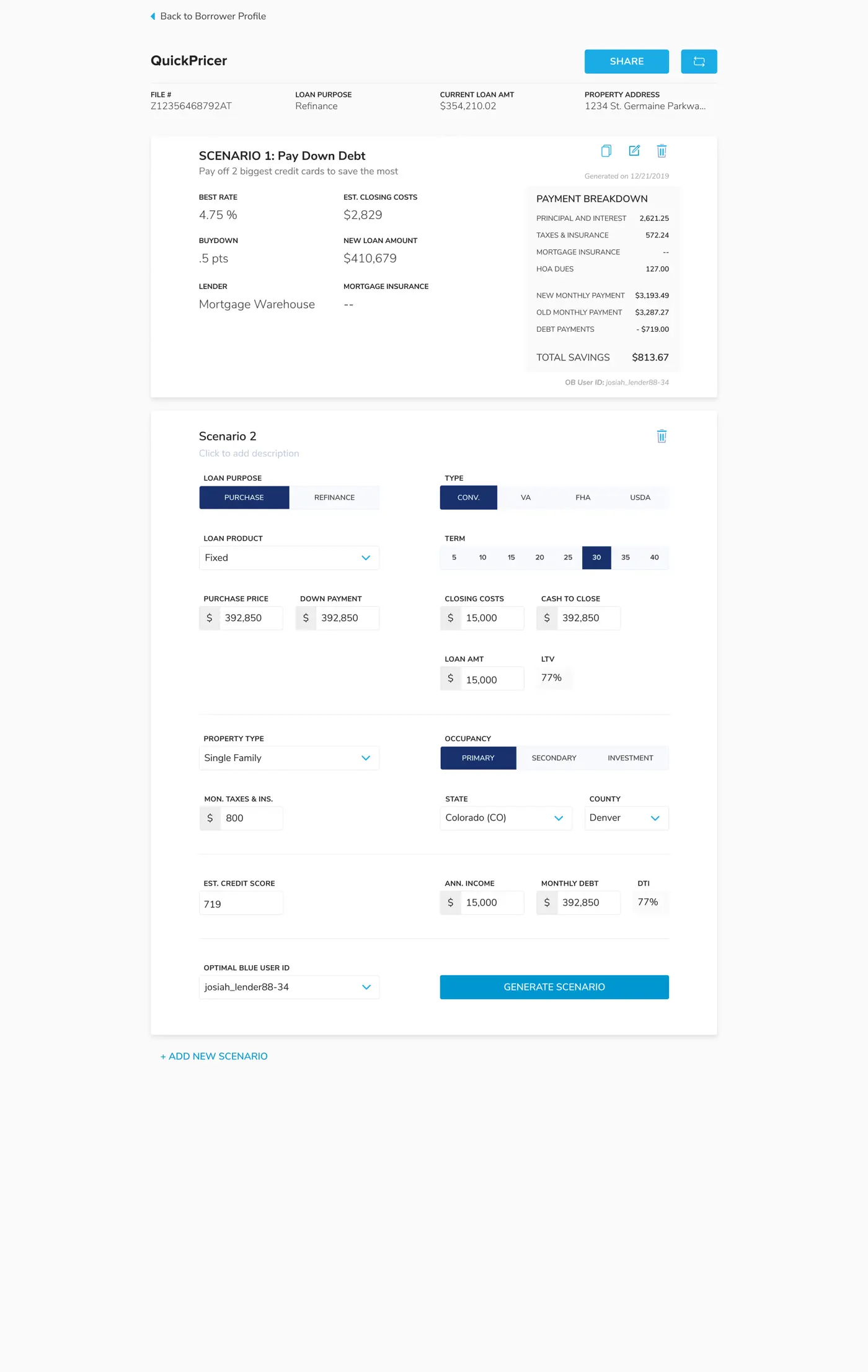
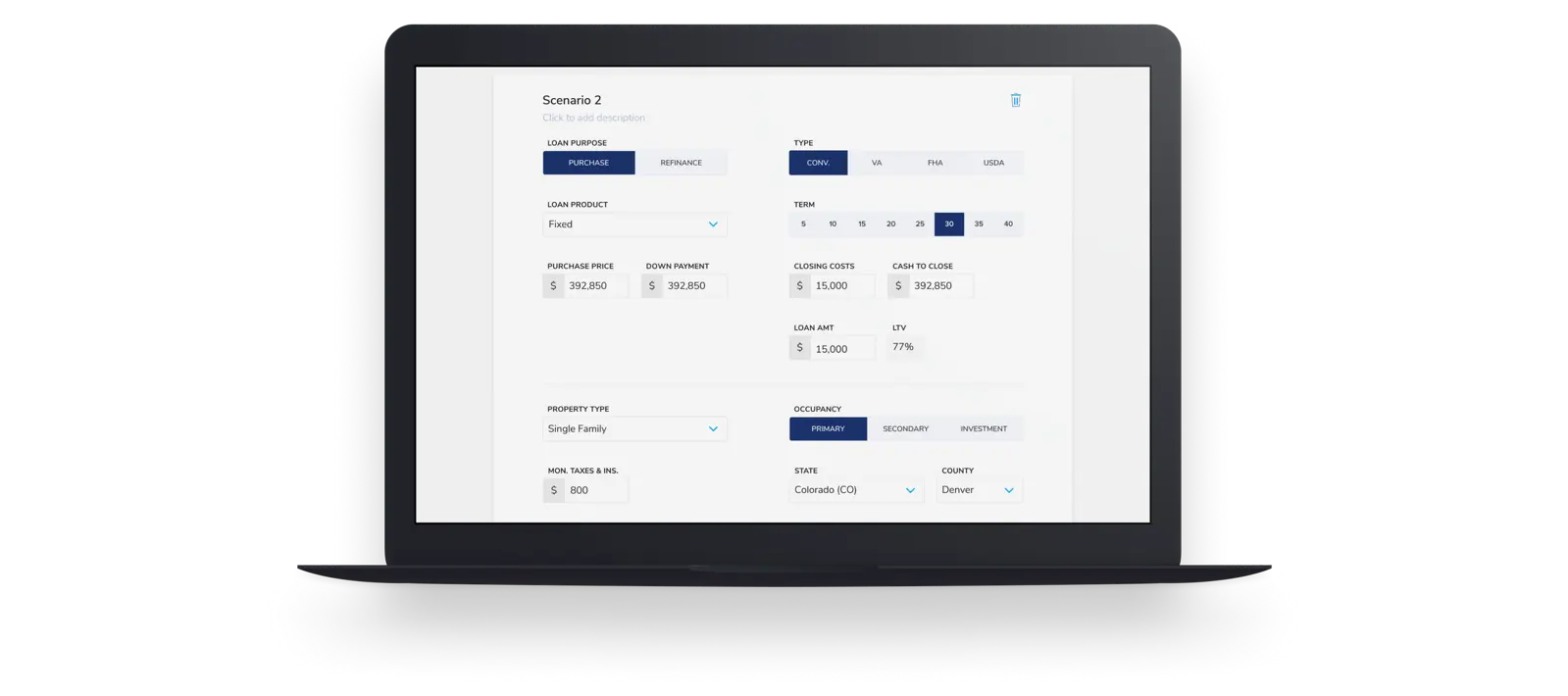
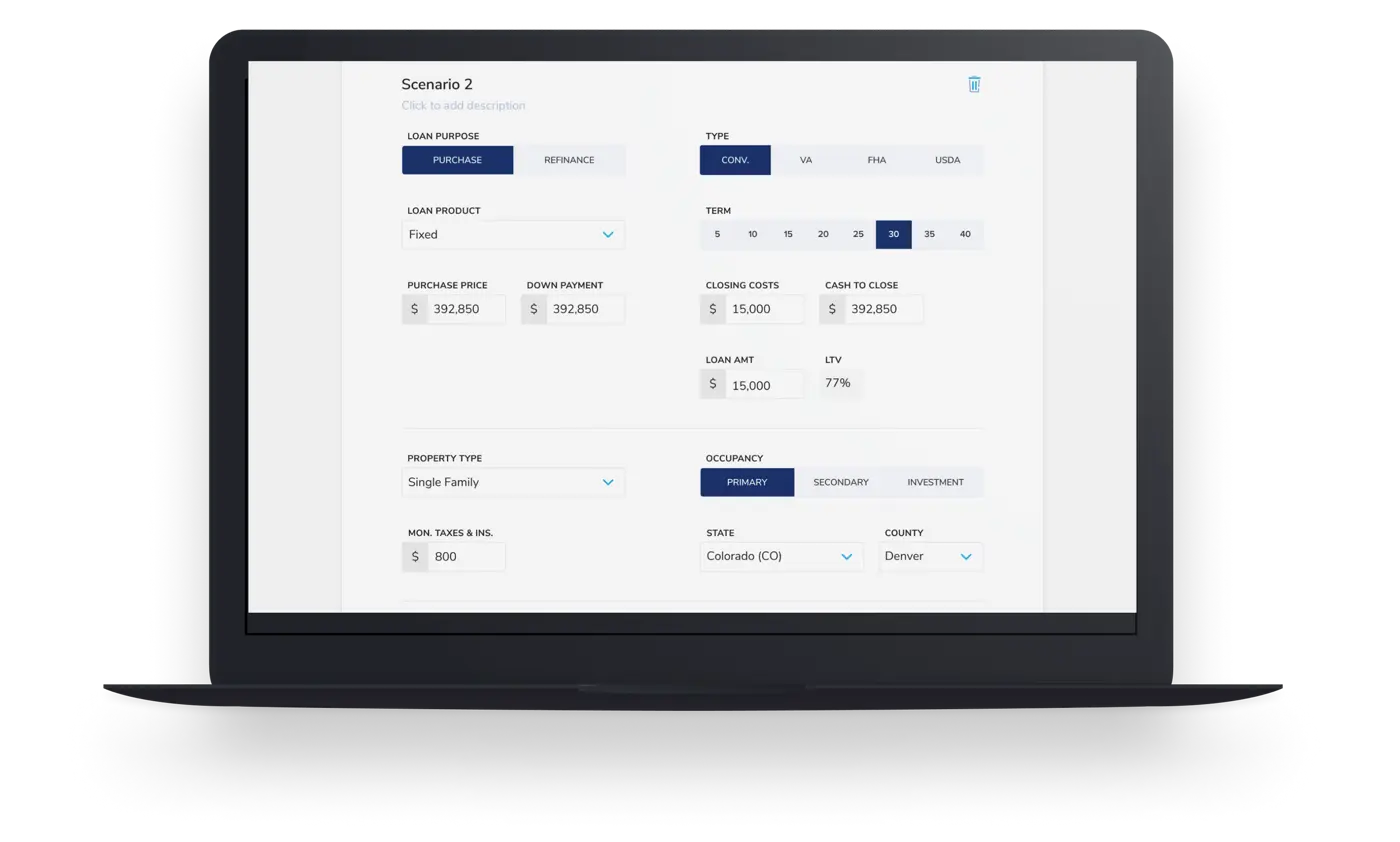
QuickPricer was defined as a conversation-led tool where information could be entered in real-time. Heavy button group usage made selectors scannable and faster to input, with the goal being that the data entry would never slow down the natural flow of the call.
The goal was that by the time the broker had gathered all the information from the borrower, they had pricing ready to review. They could then pitch the product and pricing in the same phone call, removing the risk of another broker winning the deal.
Flexibility and non-linearity
Brokers could, in the heat of the phone call, duplicate scenarios and try different offerings. The goal was to make the interface work as a part of the conversation, rather than outside of it. The layout caters to a phone call that regularly is non-linear in nature, meaning that a borrower can give info out of order and the broker can keep up.
Completed scenarios went into a collapsed read-only state to make recognition and scanning easier when revisiting a pricing scenario.
Scenario Share View
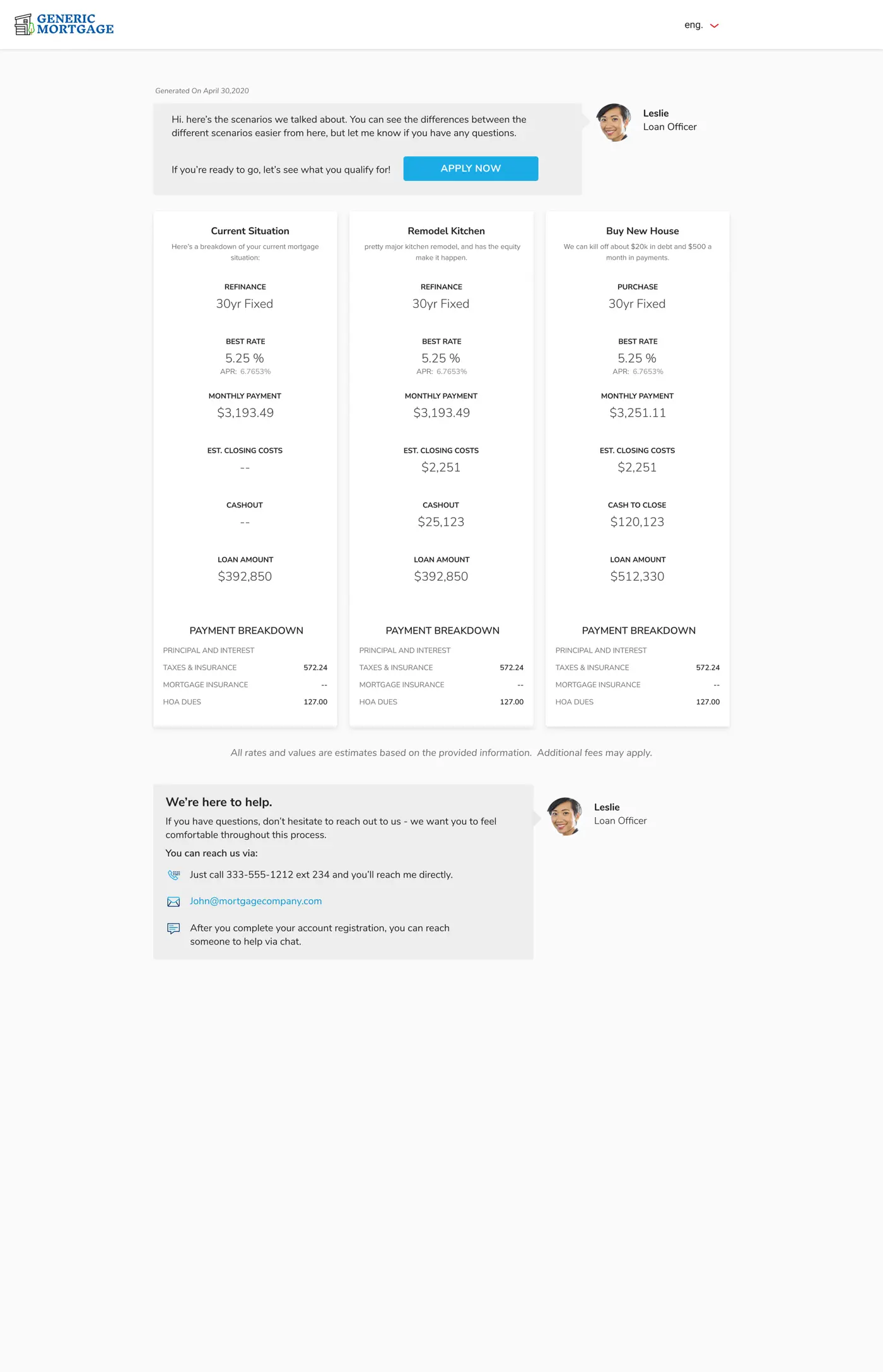
By the end of the phone call the broker could send out a pricing sheet of all the pricing scenarios discussed along with a personalized message and their contact info. Borrowers could then apply for the loan at any point in time.
The Result
"This is so cool. When do we get to use it?"
The first sales call with QuickPricer showed that we were on the right track - they didn't even want to sign with Maxwell until the product was available.
QuickPricer is still to this day a flagship feature of Maxwell's platform.